A season of hope: sermon on the first Sunday of Advent
By a Dominican Friar | 26 November 2025
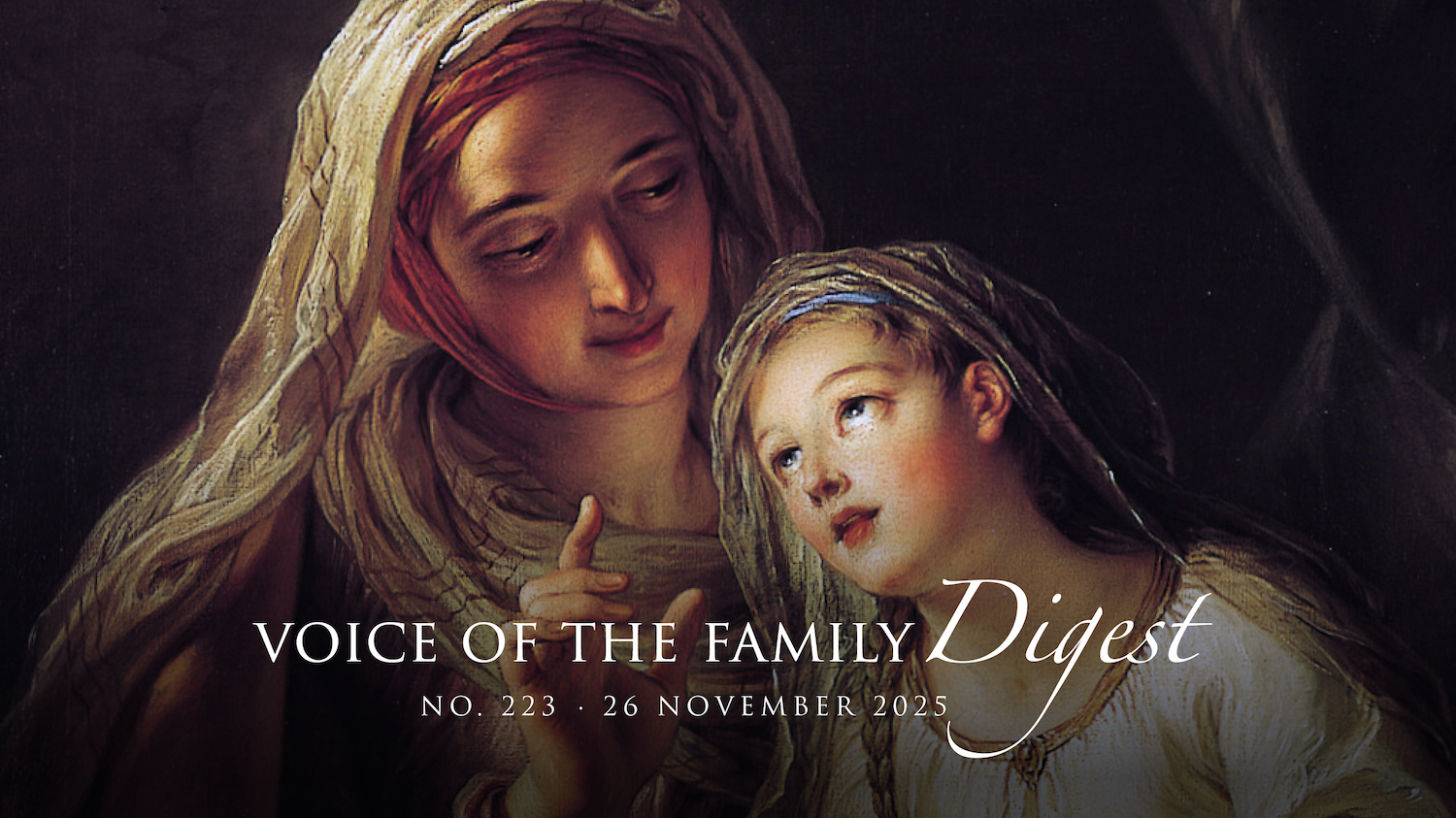
This sermon was given on the first Sunday of Advent 2024, shortly after the Terminally Ill Adults (End of Life) Bill was passed in the British Parliament.
“Let us walk honestly, as in the day …”
My brothers and sisters, Advent is a season of hope. And we are in need of hope today, not least after the grim events in the House of Commons on Friday, when Members of Parliament voted by a majority of 330 to 275 to allow doctors to “assist” their sick patients in ending their own lives. This is a great offence against the fifth of the ten commandments, which forbids the killing of the innocent. Both the patient who takes his own life and the doctors who help him to do so would be committing a mortal sin. If, as is now very likely, this bill should become law — or rather, if it is should become a pseudo-law, since nothing which is opposed to the commandments of God can ever be a true law — then we as Catholics must be resolved in our hearts to have nothing to do with it; not to co-operate with it in any way, as we value our souls, but rather to ask God to have mercy. For our country by its legislators has offered a great offence to Him and has put people into a new danger of losing their own souls.
In such circumstances, you might ask, is this Advent still a season of hope? Yes, but not of natural hope, the kind that is based on human power and wealth. The psalmist had that kind of hope in mind when he said, “Put not your trust in princes.” No, the only hope that remains to us is precisely the hope that Advent brings: a supernatural hope, based on the power and the promises of God.
What is the object of this supernatural hope? The return of Christ in glory at the end of time. As He says today, speaking of those who will be alive on that last day: “They shall see the Son of man coming in a cloud with great power and majesty.” Will this take place in the lifetime of any now living? Will it take place three hundred years hence? We do not know, and so we are commanded to be on the watch. “Let your loins be girt, Christ tells us, and lamps burning in your hands, and you yourselves like to men who wait for their lord, when he shall return from the wedding.” And in another place He says to the apostles, “What I say to you, I say to all: watch.”
It is to this, then, that supernatural hope, like an anchor, is attached: Christ’s return in glory. But provided we look for this above all, we are permitted to use our supernatural hope to look for other, though lesser, triumphs of the kingdom of God within time. We’re not obliged to suppose that everything will simply get worse and worse until the last day. No: we can hope that our Lord will raise up again good, Catholic rulers who will pass wise laws that will make it easier, not harder for people to save their souls. What God has done before, He can do again; as the prophet Isaias say, “The arm of the Lord is not shortened that it cannot save.”
Advent is a season of hope, and so it is also the season of Mary. She can teach us how to hope well. More than anyone else on earth, after all, she was hoping for the coming of the Messiah the first time round. There is a Marian feast that the Church celebrates each year, just before the beginning of Advent, that many Catholics have not heard of; though in the eastern Church it is perhaps better known. This is the feast called the Presentation of our Lady. Not the feast of the Presentation of our Lord, which we celebrate on 2 February, forty days after His birth. Rather, this is the Presentation of Mary herself in the temple, when she was a little child. It is said that her parents, St Joachim and St Ann, offered her in the temple in Jerusalem, when she was only three years old, to live there with other young maidens, and that she remained there until God wished to betroth her to St Joseph, when she was about fourteen.
What would Mary have done in the temple during those years? Some domestic tasks, no doubt, maybe learning to prepare food for the Levites or to help mend the sacred vestments. Prayer, too, of course: she must have loved to recite the psalms, the prayers of her people, or to listen to them being sung on the temple forecourt. But also, think how much she would have practised the virtue of hope. She would have been hoping for the promised Messiah, whom she knew was near, He who was to be a light for the nations and the glory of His people, Israel. And more than all the animal sacrifices in the temple, more than all the prayers offered in all the synagogues, it was our Lady’s hope that prevailed upon God at last to rend the heavens and come down.
So this Advent let us draw close to Mary, taking up her Rosary, perhaps consecrating ourselves to her. She will teach us to advance in the “hope [that] does not disappoint”.