
The sexual revolution and abortion (1)
By Ann Farmer | 29 October 2025
This is the tenth of a twelve-part series beginning with Eugenics and the true history of the Abortion Campaign (1).
The Sexual Revolution of the 1960s was not unprecedented. Soviet Russia started theirs in 1917, but the disastrous outcomes prompted Stalin to call a halt — although decades later, Western Marxists switched from “hard” economic issues to “soft” issues like sexual “freedom”, with equally disastrous results.
And yet during the “Roaring Twenties”, the West experienced a seismic change in manners, morals, dress, etc — but also the promotion of female birth control methods; as G. K. Chesterton commented: “Normal and real birth control is called self-control.”1 Far from offering female empowerment, contraception, promoted by the eugenics population control movement, empowered libertarian males by signalling that females were “ready” for sexual activity without the “danger” of childbearing. And far from preventing illegal abortion, as campaigners claimed, contraception fuelled demand, as the idea of the “planned pregnancy” led to the “unplanned pregnancy”.2
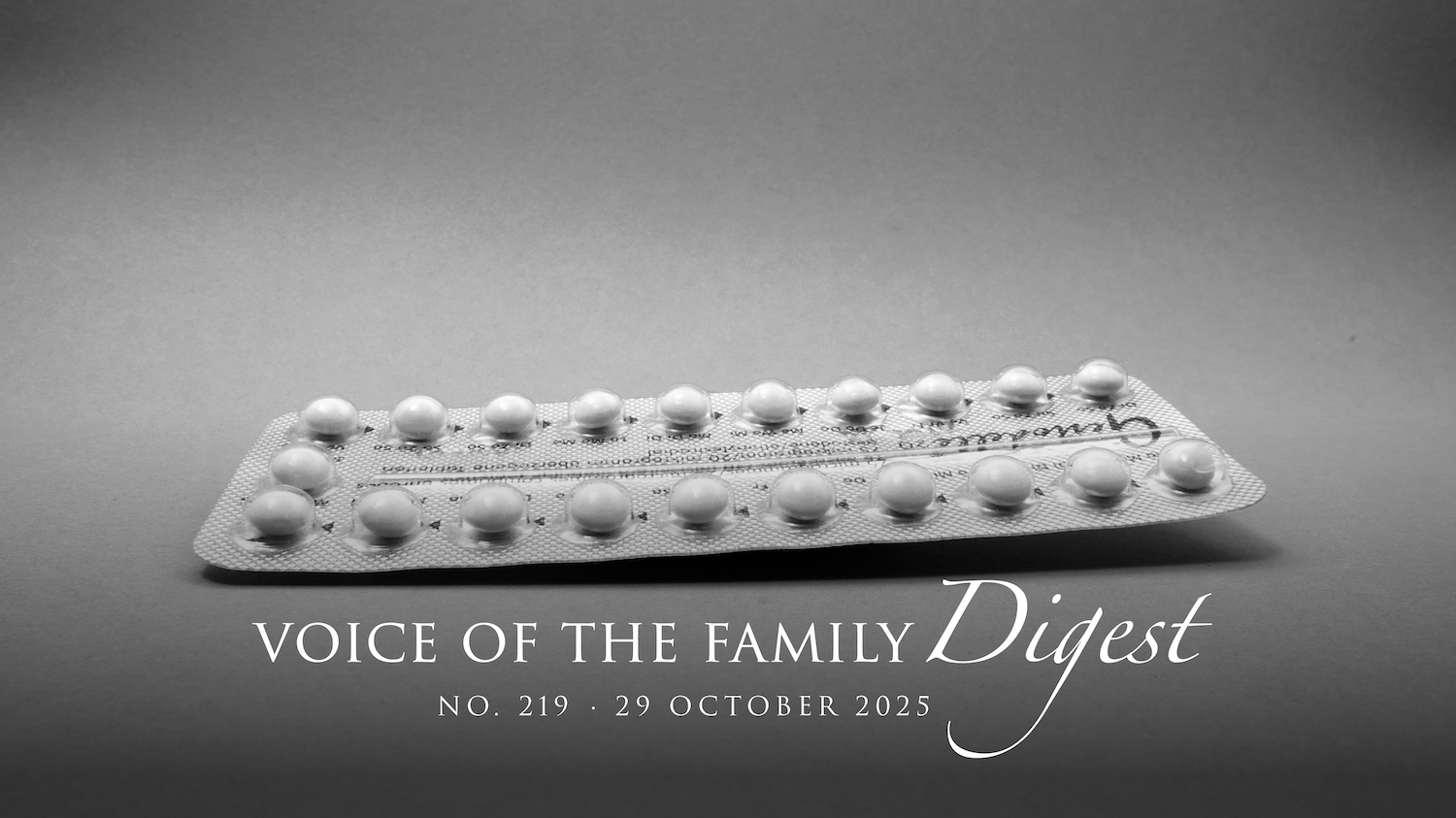
It is much easier to ban a pregnancy than plan a pregnancy, and the contraceptive pill, developed by racist eugenicist Margaret Sanger, was the catalyst for the 1960s sexual revolution: at first offered only to married women, it soon changed attitudes not only to sex but to marriage. Women were crucial in this attitude change and, as seen, philosopher Bertrand Russell believed that if women were not so “respectable” men would not need prostitutes. Arguably, the Pill ushered in an age of unpaid prostitution, but it was treated as medicine, even though the “sickness” was the perfectly natural phenomenon of pregnancy — and it turned out to be the pill that could make you ill.
From the mini-skirt to pop music, ironically, the 1960s’ explosion of creativity was the result of the post-War birth boom; however, from the Beatles’ “I want to hold your hand” in 1964, we went to the Rolling Stones’ “Let’s Spend The Night Together” — released appropriately enough in 1967. Today, sex is often the first step in a relationship, with marriage an optional extra if couples manage to stay together through the difficult times for which marriage was designed.
As seen, popular dramas like Vera Drake and the BBC’s Call the Midwife3 function as a warning not to “go back” to the “dark days” before legal abortion. And yet the end of the decade saw a mass, grassroots Christian revival;4 most young people lived with their parents until marriage, and if they anticipated their wedding night, the wedding was brought forward.5 Failing that, the child might be adopted, or brought up by their grandparents. However, “horror stories” about Irish homes for unmarried mothers also function as a warning against restricting abortion; to the modern mind, adoption is far more terrible than killing the child in the womb.
The BBC helped further the sexual revolution,6 before which it was not considered normal for young women to have out-of-wedlock pregnancies — for the unmarried to have “sex lives”. Most young people hoped for love, marriage and a family — and many still cherish these hopes. Before the age of contraception, pregnancy did not come as such a shock precisely because “preventing pregnancy” required celibacy; within marriage, regulating family size required continence, which actually prevented pregnancy, unlike inefficient (and inefficiently used) contraception. Even abortion providers now acknowledge that contraceptive failure leads to abortion.7
The vast majority expected to “save themselves” for marriage, and unlike today, when many feel used and abused, this raised their self-esteem, as they felt they were really worth waiting for. Promiscuity was regarded as a sign of weakness, and women could reject attempts by boyfriends wanting to “go further” because there was less danger of losing them to women who were freer with their favours. Marriage, supported by peer pressure and the pressure of community expectations, protected the interests of women as well as children, born and unborn.
For decades, however, this approach has been undermined by the individualistic philosophy of the Sexual Revolution, taught in the classroom as sex education.8 The legal age of consent is ignored as children learn that commitment-free sexual activity is expected of them;9 more explicit material, including gender ideology, is taught at ever-younger ages, with no parental opt-out.10 Children are taught about preventing conception “when they have sex”, but that abortion is available should conception occur. The lower social classes bear the brunt of this system and, historically, as well as contraception and abortion, eugenicists promoted sex education to teach poor children about eugenics.
Malthusian birth controller Janet Chance, ALRA’s co-founder, and a member (later a fellow) of the Eugenics Society, was also involved in sex education and marriage counselling. As well as funding ALRA, in 1929 she financed her own “Sex Education Centre” in Kensington, London.11 While blaming marital problems on lack of contraception, she admitted that even with contraception, “the apathy of the woman often remains”. But the main aim was to prevent “unfitness”, and Chance claimed that women were “easily discoverable who ought to be either sterilized, taught contraception, or granted a termination of pregnancy according to their condition”, adding that such methods should be imposed on “the unfit”: “Years of research and expenditure…will gradually make contraception (and, when medically advised, abortion) practicable, acceptable, and as successful as any other human effort for the intelligent citizen and control of procreation possibly compulsory for the degenerate, when we know who they are.”12 While claiming sterilisation would be purely voluntary, on eugenicists’ own reasoning, if the “unfit” requested sterilisation this made them “fit”, at which point they did not “need” it.
As a sexual “progressive”, Chance nonetheless believed in imposing eugenics — including abortion — on the poor, and the Eugenics Society asked her to write a children’s pamphlet on the subject.13 Chance’s wealthy husband Clinton, who opposed the Eugenics Society’s promotion of marriage, was equally involved in population control and especially concerned about racially mixed relationships and “eutelegenesis” — the scientific separation of procreation from sex.14 He believed the best remedy for poverty was for people to leave their money to the Eugenics Society — preventing poverty by preventing poor people from being born.15
Janet Chance defended the eugenicist R B Cattell’s 1937 book The Fight for our National Intelligence,16 calling it a “valuable contribution to what must eventually be an immense study” — indeed, she would like to see his critics faced with “the low-grade types he described and asked to study how far these can be reclaimed by any environmental change.”17 Now, some see sex education as teaching freedom, while others regard it as a means of preventing young people inflicting the results of this “freedom” on the taxpayer by teaching them about fertility control; both parties reject the idea of teaching self-control.
With “value-free” sex education, girls may assume that casual sex leads to love and marriage, while boys may see it as an alternative. Girls may see pregnancy as the happy ending, while boys may see a happy ending in ending the unwanted pregnancy. Unlike females, whose bodies prepare them for motherhood, males must “adopt” their own children by an act of will — an approach best adopted before the child is conceived.
Removing childbearing from the sexual equation has removed the need to take responsibility for sexual acts; being “adult” now means being promiscuous. Before the Sexual Revolution, people learned that waiting for something meant they valued it much more highly; today, partners are swiftly and easily acquired and just as swiftly discarded. Human relationships now resemble commercial transactions — “try before you buy” — with divorce becoming ever easier.18
In the 18th century, artist William Hogarth portrayed the promiscuous male’s disastrous descent into sickness and death in “A Rake’s Progress”; but since the development of antibiotics, sexually transmitted diseases are no longer viewed as a public health hazard. However, Mother Nature is continually outwitting medical science by concocting new strains of STDs, and antibiotic resistance is a growing problem.
Despite this — or perhaps because of it — the celibate presents a challenge to the Sexual Revolution. Church sex abuse scandals seem to suggest that celibacy is impossible, although such appalling scandals have affected many other institutions, also involving the married.19
Still, celibacy is treated as psychologically unhealthy; the wise virgin has become the foolish virgin.20
But there is a price to pay for “free love”, with people harmed physically, emotionally and mentally.21 St Paul wrote:
“Love is patient, love is kind. It does not envy, it does not boast, it is not proud. It does not dishonour others, it is not self-seeking, it is not easily angered, it keeps no record of wrongs. Love does not delight in evil but rejoices with the truth. It always protects, always trusts, always hopes, always perseveres.” (1 Cor. 13: 4–7; NIV)
Under the Sexual Revolution, however, lust killed love and casual sex killed romance. Evolutionary theory is demonstrated in the “survival of the fittest”, as under the British Abortion Act, babies are aborted for “unfitness”; significantly, the tragedy of Thalidomide, the anti-sickness pregnancy drug that caused severe birth defects, was a major driver of abortion legalisation, amid a rhetoric of revulsion.22
Complaints about women getting pregnant simply to claim a council flat have increased pressure to “choose” abortion — even abortion providers admit that a disproportionately large number of their “customers” are poor and/or non-white;23 many are childless24 but instead of offering moral and practical support, they are treated as potentially inadequate mothers. Abortion is not a good preparation for motherhood, but this approach coincides with the eugenics view that women with illegitimate children were “mentally unfit”; and the idea that such women transmitted their inadequacy to their children resurfaced in the 1990s in a debate about “the new underclass”.25
A culture of “rights” might seem to favour the weak, but they need to be strong to claim them, and it is easier for single mothers to claim the “right” to abortion than to demand support — and much cheaper for the State. Many abortions involve coercion, but even if the father wishes the baby to live, legally he has no say.
Self-control requires much more strength than succumbing to temptation, but sexual revolutionaries see it as damaging to the human psyche; and lack of control is key to “DIY eugenics”, for as the Bible says, a “man without self-control is like a city broken into and left without walls” (Prov 25:28). The eugenics-inspired Mental Deficiency Acts of 1913 and 1927 succeeded in derailing their own sterilisation campaign, by segregating those deemed mentally unfit; today, there would be no justification in providing abortions for those exercising self-control. For decades now young girls having repeat abortions have been given long-term contraception.26 In the 1980s, a legal challenge to the official policy of ignoring the age of consent, brought by family campaigner Victoria Gillick was rejected, allowing underage children to be given contraception, the morning-after pill and abortion if considered “Gillick competent” — in effect, if they requested birth control they were considered mature enough to have it.27
This series will continue next month with “The sexual revolution and abortion (2)“.
Notes
- “What is quaintly called Birth Control… is in fact, of course, a scheme for preventing birth in order to escape control” (G. K. Chesterton, ‘Social Reform vs. Birth Control’, ‘The Surrender upon Sex’, The Well and the Shallows (1935). https://www.chesterton.org/chesterton-on-birth-control/ ↩︎
- See: Farmer, A. E., Prophets & Priests: The Hidden Face of the Birth Control Movement (London: St Austin Press, 2002). ↩︎
- According to one commentator, it was “time to rename” the BBC’s long-running series Call the Midwife, suggesting instead “Call the Abortionist” — a “good way of making its transformation from engaging historical drama to relentless politically correct propaganda vehicle”; he commented that “[y]et again, the fourth time by my count”, it had “waded into the abortion issue”, with the latest storyline showing the whole cast in favour of abortion, with one character even writing to The Times to support “making abortions easier” (Peter Hitchens, ‘Midwives? No, abortionists in all but name’, Mail on Sunday, May 30, 2021). https://www.dailymail.co.uk/debate/article-9632561/PETER-HITCHENS-Dominic-Cummings-really-saying-Make-King.html
It strains credulity to believe that 1960s midwives, trained to bring new life into the world, would applaud the very opposite, and as he points out, historically the drama is completely wrong, since abortions were already legally available, although at much lower levels than after the 1967 Abortion Act. He commented: “The BBC claims this sort of caricature of reality is not biased and, anyway, bias in drama doesn’t matter, a ridiculous argument. Drama influences far more than news.” Indeed, film portrayals of backstreet abortion have been much more influential than any official report, notably Alfie (1966), Up the Junction (1968) and Cider House Rules (1999), along with Vera Drake (2004), which bizarrely portrayed a backstreet abortionist as a kind-hearted, altruistic local woman instead of the far more typical cack-handed, unsanitary old money-grubber. ↩︎ - After 1971 the Nationwide Festival of Light committee continued to meet and gradually evolved into the Christian organization Christian Action Research and Education (CARE) (See: Capon, John, And There Was Light: The Story of the Nationwide Festival of Light (1972); Eberstadt, M., Adam and Eve after the Pill, Revisited (San Francisco, Calif.: Ignatius Press, 2023). ↩︎
- See: Roberts, E., A Woman’s Place: An Oral History of Working-Class Women 1890-1940 (Oxford: Basil Blackwell Ltd., 1985); Roberts, E., Women and Families: an Oral History, 1940-1970 (Oxford: Blackwell, 1995). ↩︎
- This was highlighted by media campaigner Mary Whitehouse, who was subjected to merciless media mockery despite attracting widespread public support; see: Whitehouse, M., Whatever happened to sex? (London: Hodder & Stoughton, 1978). ↩︎
- Ann Furedi of BPAS acknowledged that contraceptive failure leads to abortion, but maintained that abortion for any reason is acceptable, and advocated the complete removal of all abortion laws. https://www.telegraph.co.uk/women/life/abortion-numbers-among-older-women/ ↩︎
- See: Riches, V., Sex & Social Engineering (Milton Keynes, Bucks.: Family & Youth Concern, 1986); Sex Education or Indoctrination? How ideology has triumphed over facts (London: Family & Youth Concern, 2004); Williams, E. S., Lessons in Depravity: Sex education and the sexual revolution (London: Belmont House Publishing, 2003). ↩︎
- In the UK, for “pupils aged 11 and above, RSE includes the full gamut of one-to-one intimate relationships, knowing they have “a choice to delay sex or enjoy intimacy without sex”; and the choices about contraception, pregnancy, “keeping the baby, adoption, abortion, and where to get further advice’. There is a short paragraph on what the law says about sex and young people. Out of 14 points, only one deals with “consent, and the age of consent”, while others include pornography, abortion, sexuality, gender identity, criminal exploitation and FGM. Nowhere is it stated that the age of consent is 16, and sexual intercourse with minors is illegal” (Janice Davis, “Sex lessons are UN-imposed child abuse”, Conservative Woman, April 5, 2023). https://www.conservativewoman.co.uk/sex-lessons-are-un-imposed-child-abuse/ ↩︎
- In Wales, from September 2022, Relationships and Sex Education will be compulsory for children aged three to 16 years. https://www.christiantoday.com/article/parents.pursue.legal.action.against.welsh.government.over.sex.education.for.children/138515.htm ↩︎
- Chance was described as “a notably sensible pioneer of sex education and marriage counselling”, in 1929 opening a ‘Sex Education Centre’ in Kensington, London, directed and financed by her (Wood, C., Suitters, The Fight for Acceptance: A History of Contraception (Aylesbury: Medical and Technical Publishing Co. Ltd., 1970), p. 193). ↩︎
- Chance, J., The Cost of English Morals (London: Noel Douglas, 1932) p. 73. ↩︎
- Described by abortion advocate/historian Madeleine Simms as the “femme fatale” of the Socialist League (Simms, M., ‘Backstreet Battles’, New Statesman & Society (October 23, 1992), p. 26), in 1936 the Eugenics Society’s Propaganda Committee suggested that Chance write a second children’s pamphlet on the subject on sex education “to include a description of human coition” (Letter, C. P. Blacker to Janet Chance, May 15, 1936 (Eugenics Society File: SA/EUG/C65)). ↩︎
- Clinton Chance, notes on the new “Aims and Objectives” of the Eugenics Society, submitted to C. P. Blacker, March 27, 1939 (Eugenics Society File: SA/EUG/C64).] ↩︎
- Clinton Chance, ‘Notes on Steps to Encourage subscriptions, Donations and Legacies to the Eugenics Society’, July 1936 (Eugenics Society File: SA/EUG/C64). ↩︎
- The work of Dr R. B. Cattell, one of the Eugenics Society’s two Darwin research students, involved the application of intelligence tests to urban and rural populations, and the connection between mental capacity and fertility, based on the assumption that large families were proof of inferior intelligence. Cattell believed intelligence could be measured with scientific accuracy; that it was largely fixed by genetic inheritance and that national intelligence was declining due to poor “breeding control”, outlining the necessary approach in The Fight for our National Intelligence: “An organising headquarters for grappling with this enormous, spreading evil already exists in the Eugenics Society; let us hope one will soon arise in the Government of our country. Meanwhile the struggle will not be won by firing a long-range gun at a venture as I do here. It will be won by men and women fit for the hand-to-hand fighting of committees, with stamina to carry on the struggle into the dust and heat of social welfare work in sordid cities…” (R.B. Cattell, 1937, p 164. ↩︎
- Janet Chance, note to Eugenics Society (n.d.) enclosing review (Eugenics Society File: SA/EUG/C65). ↩︎
- One commentator described the marriage contract as easier to exit than a mobile phone contract, although this view was disputed by the Marriage Foundation, which backed the move. ↩︎
- https://www.lifesitenews.com/news/gay-married-couple-faces-life-in-prison-for-abusing-prostituting-adopted-pre-teen-sons/?utm_source=daily-world-2023-02-04&utm_medium=email ; https://mercatornet.com/hundreds-allege-sexual-abuse-in-victorian-state-schools/82977 ; https://www.jewishnews.co.uk/paedophile-who-ran-day-camps-in-bushey-sentenced-to-138-years-jail-in-spain ; https://www.christian.org.uk/news/abuse-of-trust-law-finally-strengthened/?e010722 ↩︎
- This view was promulgated by Darwinian sexologist Alfred Kinsey; see: West, J. G., Darwin Day in America: How Our Politics and Culture Have Been Dehumanized in the Name of Science (Wilmington, Delaware: ISI Books, 2007). ↩︎
- See: Dixon, P., The Rising Price of Love: The True Cost of Sexual Freedom (London: Hodder & Stoughton, 1995). ↩︎
- The expected financial costs of caring for the disabled was also influential in this. ↩︎
- According to UK Government statisticians: “The Index of Multiple Deprivation (IMD) is the single official measure of relative deprivation available for England and Wales and provides the most effective way of understanding the differences in levels of deprivation between areas. Note that the Welsh and England IMD methodology differ, and their deciles are not comparable. The English IMD is based on deprivation across seven weighted domains (or types) of deprivation, while the Welsh IMD is based on deprivation across 8 weighted domains of deprivation, which combine to create the IMD by ranking each small area from most deprived to least deprived, typically dividing areas into 10 equal groups (or 10 deprivation deciles). Decile 1 is the most deprived and decile 10 the least deprived. … Women living in the most deprived areas of England are more than twice as likely to have abortions than women living in the least deprived areas. The rate in the most deprived decile is 27.5 per 1,000 women, compared to 12.6 per 1,000 women for women living in the least deprived areas. … This is true across different age groups and different regions of England…” (UK Government, Office for Health Improvement and Disparities, ‘Abortion rates by Index of Multiple Deprivation (IMD), deciles’). ↩︎
- In England and Wales, only a tiny proportion of abortions are justified for the sake of children already born (Ground D): “The proportion of abortions performed under different grounds has remained similar to previous years. In 2021, 98.0% of abortions (209,939) were performed under ground C. A further 1.6% were carried out under ground E (3,370 abortions), with 0.4% (836 abortions) under ground D. The remaining grounds account for very few abortions; 111 in total across grounds A, B, F and G. … 82% of abortions in 2021 were for women whose marital status was given as single, a proportion that has remained roughly constant for the last 10 years. 49% were to women whose marital status was given as single with a partner. This proportion has remained similar in recent years… In 2021, 43% of women undergoing abortions had had one or more previous abortions. The proportion has increased steadily from 36% in 2011… The percentage of women aged under 18 who had one or more previous abortions has remained consistent at 7% in both 2011 and 2021. The percentage of women aged 30 or over, who had one or more previous abortions has increased from 46% in 2011 to 51% in 2021… There is large variation in rates of repeat abortions across local authorities. The proportion of women who had a repeat abortion in 2021 ranged from 29% (City of London) to 54% (Knowsley). This variation could be due to a range of factors, including random variation, differing demographics or the impact of local policy decisions.” The number of abortions carried out for women with previous pregnancies is on the rise: “In 2021, 57% of women undergoing abortions had had one or more previous pregnancies that resulted in a live or stillbirth, up from 51% in 2011 … 22% of women had a previous pregnancy resulting in a miscarriage or ectopic pregnancy, up from 17% in 2011.” https://www.gov.uk/government/statistics/abortion-statistics-for-england-and-wales-2021/abortion-statistics-england-and-wales-2021
For the situation in the US, see: https://www.ncbi.nlm.nih.gov/pmc/articles/PMC8312161/] ↩︎ - See: Herrnstein, R. J., Murray, C., The Bell Curve: Intelligence and Class Structure in American Life (Free Press Paperbacks, 1996). ↩︎
- “[A specialist] nurse…gave a contraceptive injection to a schoolgirl in the toilet of a McDonald’s restaurant. …Angela Star told a conference it was necessary to combat high teenage pregnancy rates. … her stance was supported by Bob Smith [chief executive of Gateshead Primary Care Trust] who said Mrs Star had recently been named Sexual Health Nurse of the Year by the National Association of Nurses for Contraception and Sexual Health: ‘We are working with young people who are notoriously difficult to engage, they are often reluctant to visit health centres or GP practices, and want to engage the service on their own terms. It is clearly not the best place to have an injection. It would have been preferable for it to have been given in a health setting or home situation, but where a patient is clearly unwilling to visit health premises and provide that opportunity, it creates a difficult personal and professional judgement”’ (BBC News [http://newsvote.bbc.co.uk/] at October 29, 2005). The scheme was seen as so successful that it was anticipated it would be adopted more widely (Independent, August 23, 2006). In 2015, Government figures revealed that over 30,000 under-age girls had been given contraceptive implants and injections at NHS sexual health clinics over the previous four years, without parental consent. While family campaigners warned that vulnerable under-age girls were being given “a licence to engage in illegal sexual activity”, Ann Furedi, Chief Executive of abortion provider BPAS commented: “Contraception and abortion are simply not the problem. They are technical solutions that allow people to avoid the unwanted consequences of having sex” (‘33,000 children given long-term contraception on NHS’, The Christian Institute, July 27, 2015). https://www.christian.org.uk/news/33000-children-given-long-term-contraception-on-nhs/ ↩︎
- Ironically, Mrs Gillick’s name was used to prescribe contraceptives to under-16s without parental consent: following Gillick v. West Norfolk and Wisbech Area Health Authority [1985] 3 All ER 402 (HL) further legal clarifications were discouraged, and judgement on whether children were “Gillick competent” was left to the doctor concerned. http://www.fnf.org.uk/gillick.htm The ruling later covered abortion and “emergency contraception”, and subsequently, the Department of Health ruled that health workers need not tell police about under-13s in sexual relationships, since it could breach confidentiality rules and deter children from seeking contraception (Daily Telegraph, 7 April, 2006). In response to a query, the Department for Education and Skills stated that although “all young people can access advice and treatment without their parents being informed, so long as they are judged competent to understand the implications of the proposed advice and treatment…confidentiality is not absolute” and “can be breached where it is in the best interests of the child”, for example where there are concerns about “an abusive or coercive relationship” (personal communication, April 12, 2006). Under-age provision of birth control is still the norm. https://www.nhs.uk/conditions/contraception/?tabname=worries-and-questionsSee: E. S. Williams, Lessons in Depravity: Sex education and the sexual revolution (London: Belmont House Publishing, 2003). ↩︎